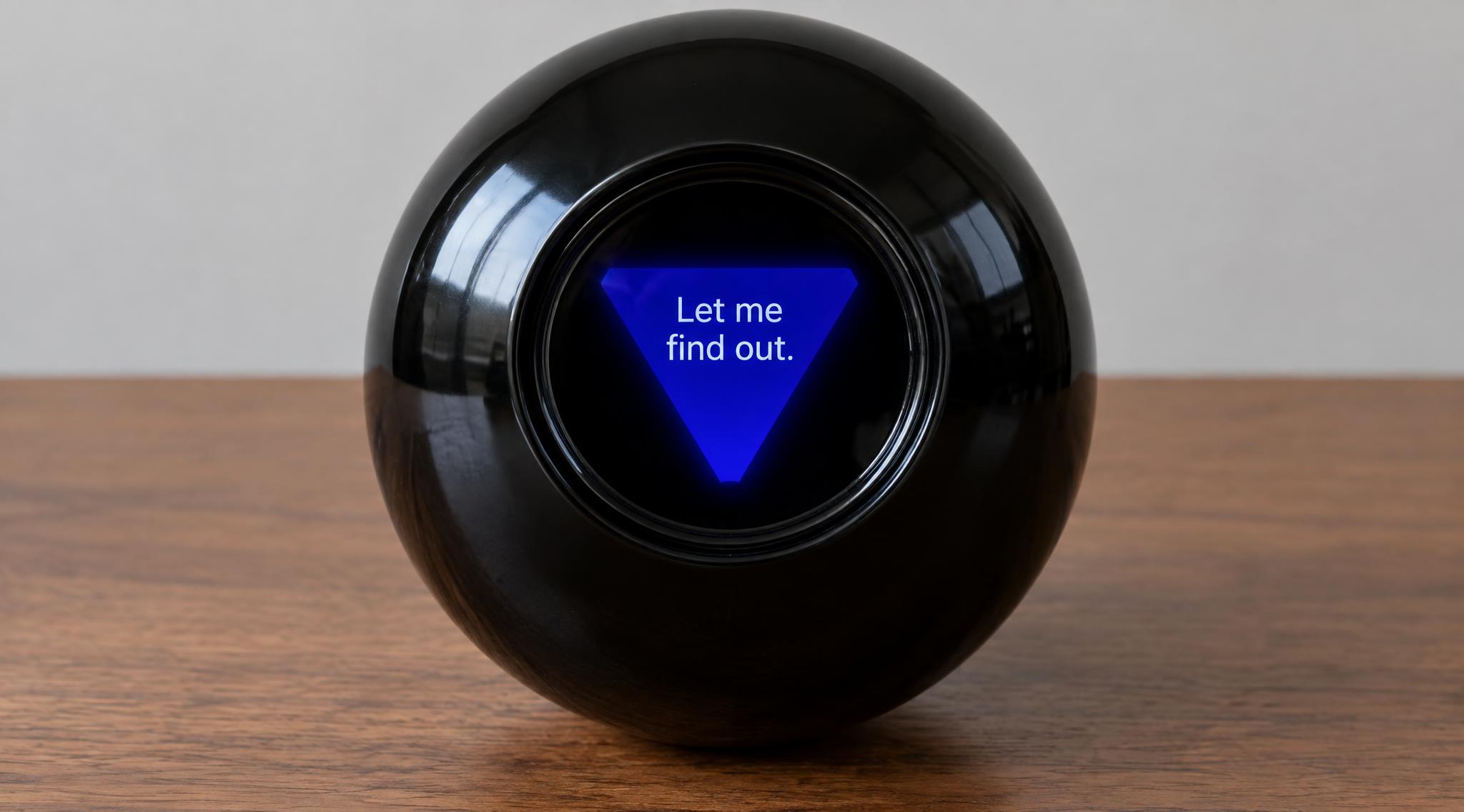
You're sitting in a meeting when someone asks you to give your opinion on a topic you're not very familiar with. As a technical leader, this happens all the time. Unlike the team members you lead, you don't really have the option of shrugging your shoulders and saying, "I don't know." Rightly or wrongly, people are coming to you for advice and decisions because... well because there is no one else to go to. The buck stops with you, and you can't tell them that they should research that on their own, especially when the person asking you to weigh in is your boss. As a leader, you will be faced with this predicament constantly. So, what do you do?
I've watched dozens of tech team managers and directors face this situation and simply freeze up. They stammer over their words, blame someone else for their ignorance, or make up an answer that could very well be wrong. This last one is especially egregious because it will eventually come back to bite them when someone finds out something doesn't work the way they very confidently said it would. I've been in this situation more times than I can count, and I can tell you that no matter what you do or say, you have to come off as confident.
The answer is to try to know everything. Spend all your spare time becoming an expert in every work-related topic someone could possibly ask you about, right? Of course not. That would be speedrunning burnout, and you would fail anyway. So, if you can't know everything, and you can't pass the buck to anyone else, how should you handle these situations?
Let me share a little trick I've learned over the years, and let me illustrate it by way of example. Let's say I'm in a meeting where someone asks, "Hey Erich, is that something we can do with technology A or would it be better to use technology B?" I would pause for a few seconds, make it look like I'm accessing my memory banks for the answer, and then say something like, "That's a fantastic question. In truth, it's a little more complicated than you might think. They both have pros and cons. Give me a little bit of time to think through that. I'll get back to you tomorrow." If I do know a little bit about technology A or B, I might throw in a few little factoids, but I'm not giving a concrete answer right away.
There are two parts to this answer that really make a difference. One, you're telling that person they've asked a really insightful question. Now they're feeling good about themselves (Look I asked a good question instead of something stupid). They will equate there good feeling about themselves to a good feeling about your response. Yes, it's a bit manipulative, but it's done for a good reason. Second, you've bought yourself some time while letting them know exactly when you're going to get them the answer.
Depending on how the question is phrased, I might alternatively say something like, "Yes, I think technology A will work for us, but technology A changes rapidly, so let me make sure nothing has changed since the last time I worked with this." Once again, you see how I'm letting the person know that I am indeed knowledgeable about this topic (even though I'm not really). Now I'm going to use that day to actually become knowledgeable. I'll read documentation, search Google for relevant articles, maybe even have a conversation with ChatGPT or Claude to see what I can learn. Then when I answer the question the next day, I am well informed and can give a truly educated answer.
So, what if you don't have a day? What if someone needs a decision right then and there? I find this doesn't happen very often, but when it does, I'm going to make that decision and sound authoritative about it. I typically start out with a strong statement, something like, "We have to make a decision now, so let's go with..." But then I often soften it at the end by saying, "but I reserve the right to be wrong, and we've got to be ready to pivot." Notice, I've subtly made this a "we" decision and not just an "I" decision. I'm acknowledging, without being too blunt about it, that we're all accepting responsibility for a hasty decision.
There are a thousand ways this can go in a meeting, so I can't give you a precise script. The important thing is that you want to come across as confident and buy yourself time to do the research if possible. Of course, now that I've let my little secret out of the bag, people will start to catch on to me. Thankfully, I'm retired so I don't have to worry about that much these days.